
Lexiterate is a dedicated web platform designed to streamline and improve the way educators assess reading proficiency and track growth for Alternative Learning System (ALS) students. The development process bridged the gap between complex system logic and user-friendly interface design.
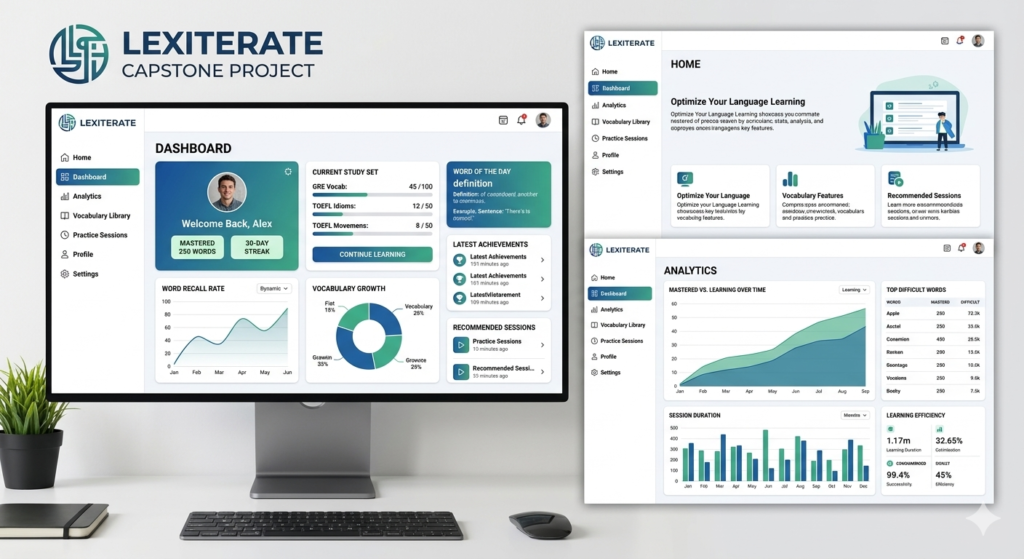
As shown below, the project progressed through meticulous planning phases: from laying out structured system architectures and data flows, to sketching initial user interface ideas on paper, and finally translating those concepts into responsive digital wireframes. This thorough design process ensures that teachers can easily monitor learner growth, manage critical assessment data smoothly, and navigate an intuitive, highly accessible web environment built specifically for community educational support.


Developing effective educational technology requires a deep understanding of the unique challenges faced by non-traditional learning environments. For Lexiterate, the core objective was to address the gaps in tracking reading proficiency within the Alternative Learning System (ALS) framework at Taft National High School. Traditional, paper-based monitoring often leads to fragmented data and makes it difficult for educators to assess real-time reading development. This system was conceptualized to centralize those assessments, providing a structured digital environment tailored specifically to the pace and demographic of ALS learners.


Behind the user interface, Lexiterate relies on a robust data architecture designed to manage student records, assessment scores, and longitudinal growth metrics smoothly. During the system design phase, our team focused heavily on mapping out clear Data Flow Diagrams (DFDs) to ensure that information moves securely and logically between students, teachers, and administrators. By optimizing these back-end processes, the platform guarantees that reading test results are instantly processed, categorized by proficiency level, and stored without creating system lag or database bottlenecks.
An administrative platform is only as good as its usability, which is why the frontend design of Lexiterate underwent meticulous planning and wireframing. The user interface was engineered to be highly intuitive, reducing cognitive load for educators who need to manage large classrooms and ensuring a clean, accessible layout for students taking the assessments. Moving from rough sketches to high-fidelity digital prototypes allowed us to refine the navigation layout, ensuring the platform remains fully responsive across both desktop and mobile devices.
The defining feature of Lexiterate is its comprehensive data analytics dashboard, which translates raw assessment scores into actionable visual insights. Teachers are equipped with real-time tracking metrics and automated progress charts that highlight individual reading growth and pinpoint specific literacy areas needing intervention. By replacing manual reporting with structured digital summaries, the platform fundamentally streamlines the educational workflow, empowering teachers to make data-driven decisions that actively foster community literacy growth.